Boat Fuel Tank Awareness
Could your boat's fuel tank be a time bomb?
August 25, 2000
After fueling up at the gas dock for a day of waterskiing, Rich McFaul of Stockton, California, stuck his head under the engine hatch to take a quick sniff as he'd been doing for almost 20 years. His 17-year-old son, David, had already settled behind the wheel and was reaching for the key. "Dave!," the father shouted, "DON'T TOUCH THAT!"

When it comes to boats, a leaking fuel tank can lead to disaster. Photo courtesy of the USCG.
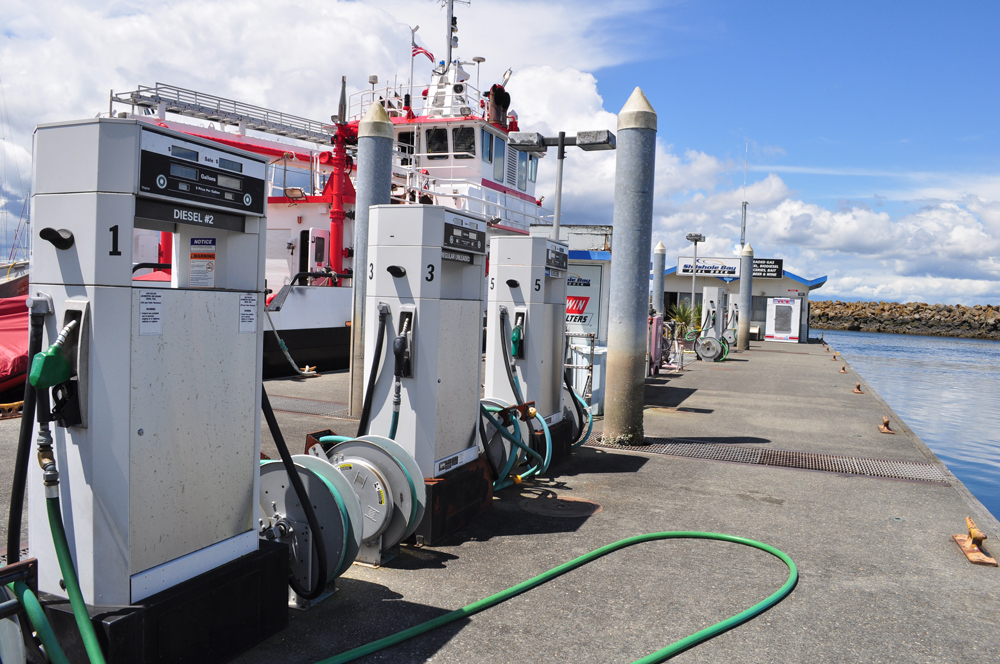
Frozen with his hand on the ignition, Dave looked at his father and then he, too, smelled the unmistakable tang of gas fumes. In the bilge and directly under the engine, was a puddle of gasoline. The gas dock attendant took one look, sprinted for the phone and quickly dialed 911 where the operator gave the almost unnecessary advice, "Sir, get everyone well away from the boat."
The McFauls were lucky — but there are literally thousands of aluminum fuel tanks in boats across this country that are time bombs waiting to go off ... and yours might be next. Consider that just two ounces of gasoline, or about as much gin as you'd put in your martini, has the explosive power of several sticks of dynamite. It is more than enough to turn your boat into matchsticks, along with anyone unlucky enough to be in it.
The fact is that aluminum (including the so-called "marine alloys") is a highly anodic material and, in contact with most other metals, it can deteriorate rapidly. Aluminum quickly corrodes when in contact with water and, in particular, salt water. Aluminum is subject to fatigue when it endures continual flexing, such as when the fuel surges around as the boat pounds across a choppy harbor. And then, of course, there is the problem of joints which rely heavily on the experience, or inexperience, of the welder.
So why do most boat manufacturers use aluminum tanks? The answer is brutally simple: they're cheap. A far better tank is one of the many polyethylene tanks available, but at a higher cost. It is a case of keeping down the price and not worrying about the consequences a few years down the line. (To better understand boat fuel systems in general, read Modern Gasoline Fuel Systems on Boats).
A corollary to this callous disregard by some boat builders is that they install the aluminum fuel tanks in ways that almost insure that there will be problems. Many builders place the fuel tank in the boat and then seal the cockpit on top of it without leaving a way to inspect or replace the tank.
This means that if you do find a leak in your tank, you have to literally destroy the cockpit floor of your boat to remove the tank. Some boat manufacturers who have a conscience and basic good sense install a removable panel in the cockpit floor so that owners can regularly inspect the fuel tank thoroughly. On a wood floor, that might mean a piece of plywood above the tank that is screwed into place. On boats with molded cockpit floors, it would be a fiberglass lid that is probably both screwed and siliconed in place.
Compounding the problem, some manufacturers use foam to help secure the tanks in place. This method is illegal, of course, because federal regulations strictly prohibit encasing a fuel tank in a way that allows water to collect on or around the tank (33 CFR Part 183, Subpart J, Article 183.552, if you're interested).
So what can you do to protect your boat and your family? First of all, inspect your tank regularly. No, this doesn't mean just looking at the top of the tank through the eight-inch inspection port provided over the gas fittings. I mean you look — and touch — every square inch of the tank: top, sides and particularly the bottom, which is prone to corrosion from bilge water. If the tank is held in place by straps, loosen them and look under the straps for corrosion.
Second, practice safe starting. Just as Rich McFaul discovered, the best fume detector is the human nose. Before you use your boat and every time you refuel, be sure to open the engine cover and take a sniff or two. Don't even flip on the bilge blower until you've poked your nose into the bilge, because a spark may set off that deadly fuel vapor.
Aluminum fuel tanks in a marine environment are and will always be a problem. Heavier gauge aluminum will lengthen the life, and better mounting and inspection methods will reduce the risk. But, since a non-corrosive substitute is available, boat builders need to eliminate these time bombs from your boat.
If you need to replace a leaky fuel tank, find a polyethylene replacement. When the American Boat and Yacht Council used a Coast Guard grant to study poly tanks, they found that the synthetic tanks installed as much as two decades ago had zero failures, and the ABYC says that polyethylene tanks pose no risk at all. But until you buy a boat with poly tanks or replace the aluminum tank in your boat, continual watchfulness is your best defense.
And if you don't think you have time to take the safety precautions of sniffing and inspecting regularly, then you may get a chance to relax in a hospital. If you survive.
Editor's Note: this article was updated in July of 2017.