Roller Furling Mainsails
Reducing sail area quickly and easily.
Q: What are the advantages/disadvantages of having a roller furling mainsail versus a normal one?
Peter V.
Camden, Maine
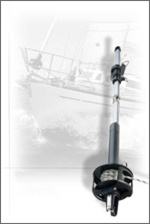
A: I think you may be confusing a roller furling headsail (jib) with a roller furling mainsail. The former is far more common. But to address your question directly, there are roller furling mainsails, they can be "rolled" into either the boom or the mast. The big advantage to either system over a normal mainsail is the ease and speed at which one can reduce sail area. If the wind suddenly comes up, you can prevent excess heeling, weather helm on the tiller and possible capsize by reducing the amount of sail area you have catching the wind. There are electric and hydraulic systems on the marketplace that can literally reduce sail area with the push of a button.
If you're shorthanded or sailing solo, reducing sail area quickly can be a daunting task with a normal mainsail. You have to release the halyard, pull the sail down and tie reef lines around the boom. And to do so you'll have to have the boom centered, no small task at some points of sail.
The advantage of mainsail roller furling in the boom is that you can still have battens in the sail, thus allowing a more efficient sailplan with roach (extra sail area outside what would be the straight line drawn from the head of the mast to the end of boom, pardon me if you already know that). That extra sail area has to be supported by battens. Unless the battens are extremely flexible they cannot be rolled into the mast in a mast-furling system. Battens this flexible are nearly worthless in supporting roach.
In-boom furling can accommodate battens, they just have to be parallel to the boom to be rolled into the system. A number of companies make such systems.
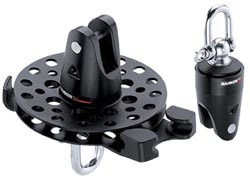
Roller furling in headsails is far more common. Nearly every major manufacturer of sailing hardware makes roller furling units. Harken Yacht Systems has some excellent hardware, and an online system for determining the best hardware for your particular boat. See their Compu-Spec program online at http://www.harkencompuspec.com. Other prominent manufacturers include Profurl and Lewmar. Your local chandlery can help you make the right choice.
The advantages of roller furling in headsails is that one does not have to go forward on a pitching foredeck to bring down a headsail, unhank it from the forestay, and re-hank on another jib, all while the deck is pitching up and down in swells. This experience can be very dangerous in high wind and big waves; it's a bit of a cross between a trampoline and a rodeo bullride.
There are manual systems (control lines leading back into the cockpit that one uses to furl the jib) and hydraulic systems that can furl with the push of a button. Some modifications to your forestay and jib will be necessary, for the latter talk to your local sail loft, who may be able to modify your existing genoa jib to make it compatible with roller furling. It's common to add a strip of Sunbrella or other UV-resistant cloth to the forepanel of the jib to reduce sunlight degradation of the sailcloth when the jib is rolled (furled) onto the forestay. You may have seen these in practice, jibs with a blue cloth strip at the forestay.