Wildlife Gone Wild: Protect Your Boat from Five Invaders
In the marine environment, these five invaders can shut you down.
September 26, 2014
The marine environment is hard on your boat in many ways, even beyond the obvious corrosion issues, the danger of sinking, and the ongoing incursion of moisture in all places. One less-obvious aspect is wildlife. If you’re not careful, these five untamed critters can put an abrupt end to your boating season.

A pair of osprey looking for a place to nest can shut down your boating season.
1. Osprey – You might not think of these majestic raptors as a boating problem, but if you leave your boat uncovered and on a lift in an area where they nest in large numbers… well, this picture is worth 1,000 words. The owner of this boat failed to keep it covered in the early spring, when osprey migrated up the coast looking for a good spot to raise their young. And this situation is worse than it looks; since osprey are a federally protected species, removing the nest would be a violation of the law. In fact, only individuals authorized by the US Fish & Wildlife Service are permitted to remove osprey nests during the bird’s nesting season (mid-April through mid-September—the prime boating months for most of us).
The best way to stop such a feathered infraction is to keep your boat under wraps, with a cover that’s supported in the middle so no depression or recessed area tempts the osprey into thinking it would be a good place to start building. As long as you do so through May, by which time most osprey have established their domain, your boat should be fine for the remainder of the season.
2. Barnacles – That these tiny but troublesome crustaceans make our list shouldn’t come as a surprise to any saltwater boater. They attach themselves to hulls, running gear, and anything else that stays submerged, causing huge amounts of drag and drastically reducing boat speed. But it can also be a whole lot worse—in fact, barnacles can eat right into your boat due to a phenomenon known as “crevice corrosion.”
Once attached to a metal surface, like a propshaft, barnacles can prevent its exposure to oxygen. Stainless steels’ protection from corrosion comes from its oxide coating, and when oxygen can’t reach the metal, corrosion can affect even the best stainless-steel. The solution? Prevent barnacles from establishing a solid foothold by giving metal parts beneath the waterline a thorough scraping every month or two.
3. Jellyfish – Here’s another insidious invader that can shut you down. Though we may cruise past jellyfish a million times without a thought, on rare occasions a mass of jellies can get sucked into raw water intakes and clog them up. This can cause your raw water washdown, livewell, some heads, or even an engine to shut down. The issue usually solves itself (as soon as the suction stops, the jellyfish tend to fall away), but every once in a while the blockage clogs a filter, does damage to a pump, or causes an engine to over-heat.
In jellyfish-infested waters, there’s really no way to entirely eliminate this possibility. Remember, however, that the problem is easy to fix; just shut down whatever is pulling water through the intake, and it should clear on its own. The trick to preventing any jelly damage is to simply be aware of all of your ship’s systems: take note of clogged intakes as soon as possible, and when raw water stops flowing, don’t ignore the issue.
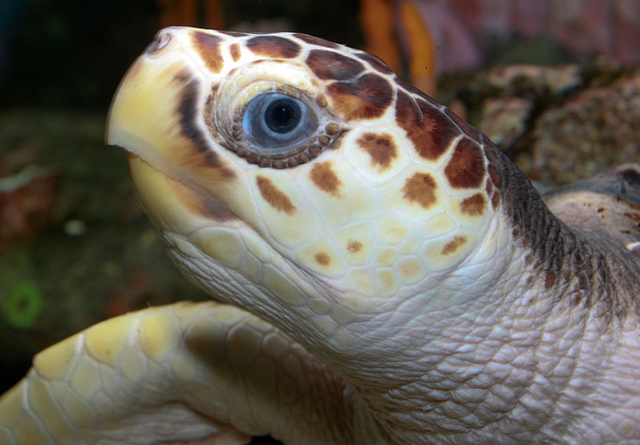
This guy may not mean any harm, but sea turtles can do serious damage to your boat.
4. Sea Turtles – These harmless creatures certainly don’t mean to ruin boats—but sometimes they do anyway, through no fault of their own. (And actually, the captain has to take the blame.) Sea turtles don’t attack boats or unwittingly damage them, but they do have a hard shell and can weigh hundreds of pounds. So when a boat is traveling at high speed, striking one can cause major damage. Bent props, shattered outdrives, dislodged through-hull fittings, and leaking shaft seals can all result.
Preventing sea turtle strikes is as simple as keeping a good lookout. If you see one, don’t assume it will dive out of the way; this may be their usual course of action, but you may catch one napping or, unfortunately, find one that’s already been done in by someone else.
5. Mud Wasps – No one likes finding wasp nests aboard their boat, but what’s even worse is not finding the nest those perky insects have built in a vent. Mud wasps build a nest that’s strong and thick enough to completely shut down the air flow, and if the particular vent they choose happens to be that of a fuel tank, you may lose power. This is a particularly frustrating problem, because it can take hours to discover where and how the vent is clogged.
You can’t really prevent wasps from building nests in the vent lines, so just be aware that this can happen, and remember to check the vent lines for this issue if the engine seems starved for fuel and you can’t isolate any other issue. Sometimes those tricky wasps will build the nest up inside the line, where you can’t see them. If this is the case, use a wire-fish or a blast of compressed air to bust the nest loose—and be ready to run for cover.
Also, be sure to check your fuel filters regularly after such an event. The nest can leave grit and crud in your fuel tank that may clog the filters once it's run through the system.
We boaters generally want to live in harmony with the environment, and enjoy the sights and scenes it has to offer. But wildlife is wild, and through no fault of its own it may make your boating life a bit tougher -- so stay on the lookout for these wild invaders.