Offshore Powerboat Association: Why It Works
Will the OPA be the “last man standing” in the offshore racing world?
I’m in a “Declaration of Independence” state of mind. So I hold these truths to be self-evident: That offshore powerboat racing has never been and never will be a mainstream motor sport, that it has never been profitable for more than a lucky a few, that with rare exceptions its leadership through the years has been myopic and self-serving, that the racers just want to race and that the sport, in its finest moments, is far more spectacular and more compelling than a lot of the “action sports” on television.
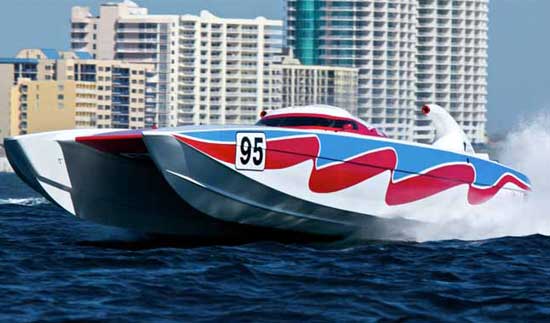
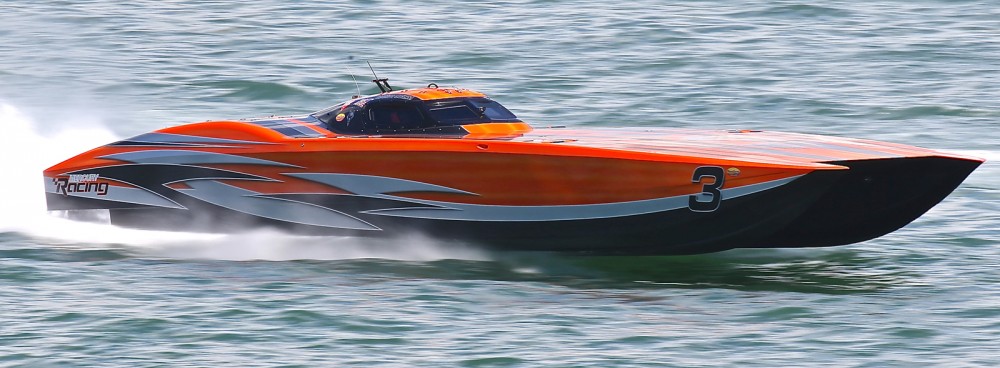
Even with older boats, the OPA circuit had more events and larger fleets in 2010 than any other circuit.
One more truth: Fragmentation does not work, and that one holds for ANY sport. Take my own favorite extracurricular activity, 24-hour mountain bike racing, which I did for ten years until it died last year, thanks to one solid organization morphing into two sketchy ones awhile back. Now both groups are all but dead—as is 24-hour mountain bike racing. There simply wasn’t enough interest to support more than one series of races.
Sound familiar? Here we are in offshore racing, looking like Humpty-Dumpty after a failed back-flip from a mighty wall—except it didn’t happen in a single, “Hey, watch this!” moment. It took decades of splitting and factionalism and infighting that led to lots of new and improved “sanctioning bodies,” all of which were finally going to get it right.
So why should we believe that the Offshore Powerboat Association, based in the Northeast with 80 registered teams, will be any different? To be brutally honest it has neither the administrative polish nor the marketing sophistication—not to mention the financial wherewithal—of APBA Offshore LLC, which had a great run from 1999 through 2002. And it doesn’t have a sexy marquee venue like Key West, the perennial lynch pin for Super Boat International.
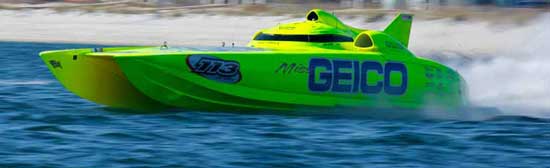
Several Geico-sponsored television shows will soon cover OPA events.
But what OPA does have is a grassroots foundation of no-nonsense, “lunch-bucket” racers. Its leadership comes from a group of guys who call themselves “The Jersey Boyz,” passionate and personable guys with names like Ed “Smitty” Smith, Augie “The Godfather” Pensa and Louis “The Rigger” Giancontieri. The racers are not charged an entry fee for each race. Instead, they pay a fee of a little more than $1,000 a year, and that makes them eligible for all OPA events. (Naturally, they have to cover their own equipment and travel expenses.)
The organization has no payroll. It is staffed entirely by volunteers. Oh wait, a few OPA staffers get their airfare and lodging covered for various race sites. Better than nothing, but hardly profitable.
It’s a simple setup for sure, but you know, simple often translates to effective. This year, OPA had more events, and larger fleets at those events, than any of its rival organizations. Racers came from as far away as California and Washington—and even Qatar—to compete in races from Michigan to Florida. Sponsors included Geico and Amsoil. Four to six (depending upon who you ask) Geico-sponsored television shows covering OPA events will begin airing this month.
Not bad for a bunch of guys with odd nicknames and a fleet that is mighty short on “new” race boats—some of the boats on the OPA circuit, which has a number of classes, are more than 20 years old. And a hefty share of the remaining fleet is at least 10 years old.
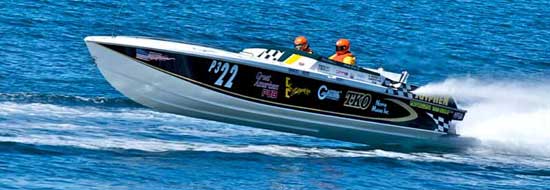
This 40-foot Sutphen was racing against many other older boats.
“It’s amazing how well these old boats hold up,” Richie Sutphen, a noted designer and builder of high-performance V-bottoms, told me during the OPA World Championships in Orange Beach, Ala. “They just don’t go away.”
As it happens, Sutphen and I were standing in front of one of those old boats, a 40-foot Sutphen that was racing in a class where its top competitor was an equally seasoned (if that’s the right word) 32-foot Skater catamaran.
Another thing that binds the OPA faithful? Intense camaraderie. Generally speaking, offshore racers across all organizations are a good lot—they tend to help each other with just about everything during race weekends. OPA takes that to another level. Helping fellow racers, even those in your own class, isn’t really optional. It’s expected, and not just because the next racer in need could be you.
“We treat our racers right and they treat each other right,” Smith, the president of OPA told me at the end of the OPA Worlds.
I told him I was impressed with what I’d experienced during my weekend in Orange Beach covering the event for Powerboat magazine.
“Well, I’m glad you finally got to see what we do and what we’re about,” he said.
Yes, I did. And if OPA sticks to its principals and sticks together, I think I also see a bright future for offshore racing.
Editor's Note: All photos courtesy Tim Sharkey/Sharkey Images
 Bi-weekly columnist Matt Trulio is the editor at large for Powerboat magazine. He has written for the magazine since 1994. Trulio’s daily blog can be found on speedonthewater.com, a site he created and maintains, which is the high-performance arm of the BoaterMouth group.