Qatar Cup Shaping Up
The inaugural offshore powerboat race in Doha is attracting an international field.
December 22, 2014
Co-organized by the Qatar Marine Sports Federation and the newly formed Offshore Powerboat Grand Prix Series in the United States, the upcoming Qatar Cup, which will happen on Doha Bay, Feb. 6-8, reportedly has commitments from approximately 50 offshore racing teams. Of those teams, according to Steve Curtis, the Spirit of Qatar offshore racing team's United States representative and interim president of the OPGP organization, 12 are coming from the United States.

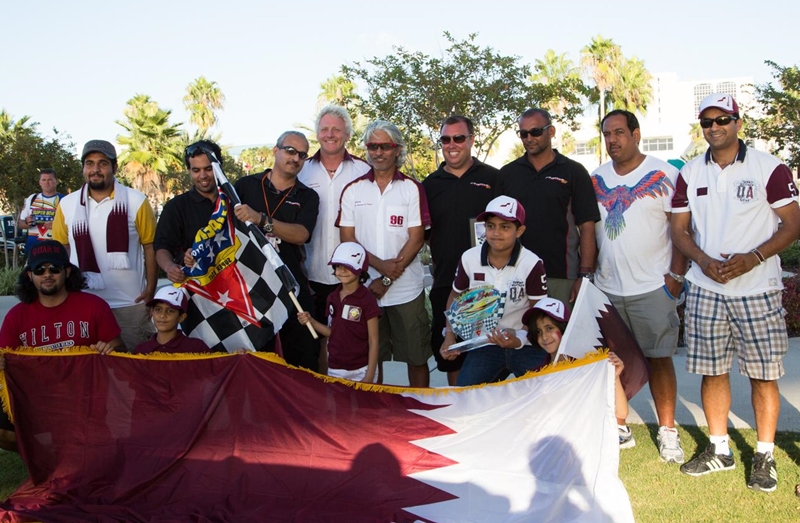
Approximately 50 offshore racing teams are expected to compete in the upcoming Qatar Cup. Photo courtesy Qatar Marine Sports Federation.
In addition to a number of teams from the Middle East including the Spirit of Qatar 20 duo Qatari Ali Al-Neama and American Billy Moore, two teams from Australia and one from New Zealand will compete in the event.
Curtis, in a recent telephone interview said that the final roster of U.S.-based teams will be released on the day their boats ship, using the logistical services of sponsor GAC Pindar, from Jacksonville, Fla. The Qatar Marine Sports Federation is covering all raceboat and equipment shipping costs, as well as providing show-up fees and financial assistance with team lodging and airfares. All teams will stay at the Doha Hilton, another Qatar Cup sponsor and the host hotel for the event. "They have been doing this for years for H-1, F-1, and X-Cat teams," said Curtis.
Speaking of his own racing partner, Curtis added, "The passion of Sheikh Hassan bin Jabor Al-Thani, the leader of the Spirit of Qatar team, for the sport is unrivaled. What he has done for powerboat racing is more than anyone else has done in the past 30 years."
The classes coming from the States are Super Cat, Super Vee Light, and Super Vee. The U.S. teams competing will be sanctioned under the American Power Boat Association, the domestic arm of the Union Internationale Motonautique, powerboat racing's internationally recognized sanctioning body.
"Super Cats—with around 800 hp (per each of their two engines)—is the main class we are bringing over," said Curtis. "But we also have the V hulls and we will try a new handicap system that is used in sailing to have all the boats on the course at the same time.
"Basically there will be two laps on the course—the fastest boats may do 10 of the longer laps and the smaller boats may do 10 of the shorter ones,” Curtis explained. “A handicap will be determined to put the racing on a level playing field and they will use the same checkered flag. This format was used before in a series called Offshore 2000 in the 1990s and was very successful."
The current Qatar Cup plan includes one day of qualifying and two days of racing, much like the weekend racing format currently used in UIM Class 1 competition.
Offshore powerboat racing fans who want to watch the upcoming Qatar Cup in real time won't have to travel to Doha, the country's capital city, to do so, thanks to livestreaming and television coverage from the event. The livestream will be hosted on the Qatar Marine Sports Federation website.
"We're even developing an app so people can watch the live stream from the website on their smart phones, get lap times, and more information in real time,” said Curtis. “I don’t have the final details on television coverage, but they should be announced soon.”
In late November, representatives from the QMSF, the OPGP and the UIM met for a weekend of planning meetings for the event. Among the developments that came out of those meetings was that the entities involved agreed to what Curtis called a "five-year molding program" commitment for the Qatar Cup.