The Rivalry Between Mercury Marine and Evinrude Outboards
Evinrude invented outboards; Mercury competed fiercely for decades.
December 21, 2025
The outboard motor industry in the United States saw extended competition between two companies from Wisconsin. Evinrude and Mercury Marine developed engines that powered boats for recreation, fishing, and racing over many decades. This competition started early in the 20th century and continued until recent years.
The Beginnings
Ole Evinrude created the first practical outboard motor in 1909 in Milwaukee. He built a portable engine after rowing across a lake to bring ice cream to his future wife, only to find it had melted by the time he returned. This experience led to his design, which attached to the back of a boat and made powering small vessels simpler.
Early Evinrude motors used two-stroke technology and became common on boats during the 1910s and 1920s. Advertisements from that time showed families using the motors for outings on lakes and rivers.
In 1939, Carl Kiekhaefer founded Mercury in Cedarburg, Wisconsin. He started by fixing a group of rejected engines from another company and then began producing his own models. Mercury engines soon gained attention for their build quality and speed.
Post-War Growth and Racing Competition
After World War II, both companies grew. Evinrude became part of Outboard Marine Corporation, which also produced Johnson motors. Mercury expanded its line and built a private testing site called Lake X in Florida for engine development.
Competition appeared in boat racing during the 1950s and 1960s. Events organized by groups like the American Power Boat Association featured boats with engines from both brands. Mercury often won speed records, while Evinrude engines showed strength in endurance.
Engine Design Differences
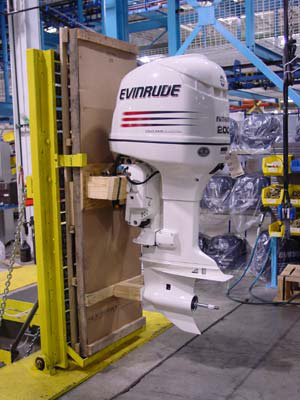
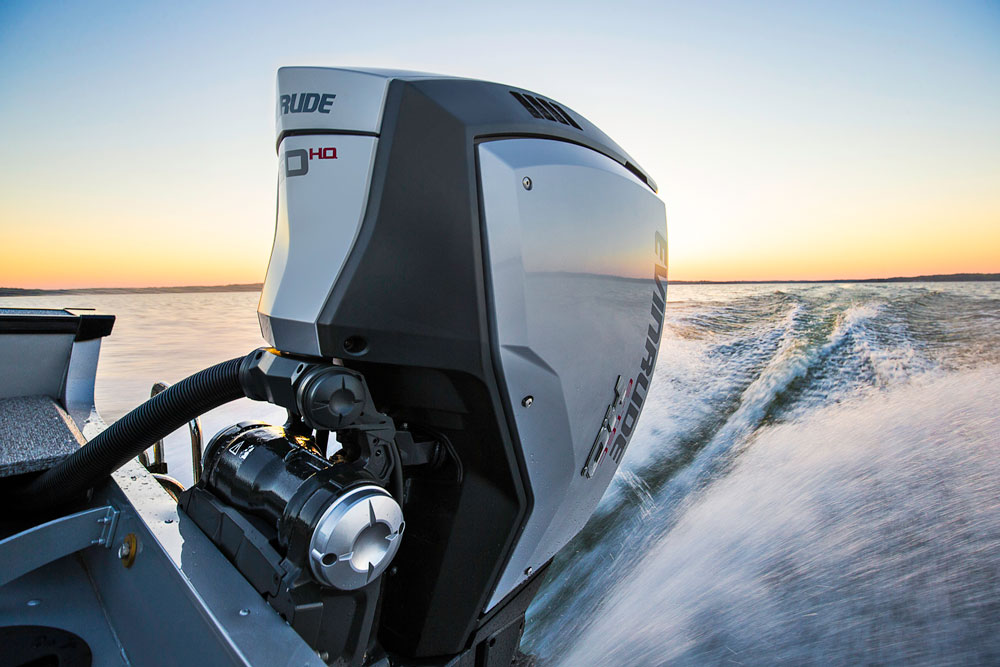
A key difference lay in engine design. Evinrude continued with two-stroke engines. Later models included the E-TEC series and the G2 line, which used direct fuel injection to provide strong torque and meet some emission standards.
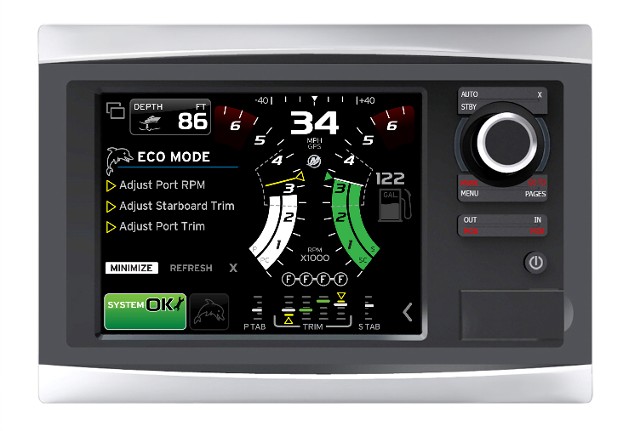
Mercury focused on four-stroke engines. The Verado series introduced supercharging for smooth power delivery and better fuel use during normal operation.
Boaters discussed the choices. Two-stroke engines started quickly and weighed less, which helped in certain boats. Four-stroke engines ran quieter and used less fuel over long periods.
User Preferences and Later Developments
Both companies supported professional fishing tournaments. Anglers used the engines in competitions, testing them under repeated starts and varying speeds.
Environmental rules in the 1990s and 2000s required lower emissions. Four-stroke designs adapted more easily. Outboard Marine Corporation faced financial issues and filed for bankruptcy in 2000. Bombardier, and later BRP, bought Evinrude and released updated two-stroke models.
In 2020, BRP stopped making Evinrude engines. Factors included changes in buyer preferences toward four-strokes and company priorities in other areas. BRP later arranged to use Mercury engines on some of its boat models.
Mercury remains in production and offers four-stroke models along with electric options. Many Evinrude engines continue in service on boats worldwide. Collectors maintain older models from both brands.
The long competition between Evinrude and Mercury led to improvements in outboard motor design, performance, and features. These changes affected boating for many users over generations.