Fish Central: Outer Banks
From bass to bluefins, the northern Carolina coast has it all
North Carolina's Outer Banks is among the world's most unique outdoor spots. Steeped in nautical and military history, "the banks" offer a rare blend of surf and sand, ocean and sound, island life and resort amenities.
The banks are a cluster of barrier islands that stretch just off the northeast coast of North Carolina and offer anglers an almost boundless variety of fish and fishing. The banks are surrounded by water — saltwater, brackish water and freshwater. They offer close-to-the-ocean remoteness, yet aren't too far off the beaten track for people more accustomed to life's basic necessities. And best of all, the banks are a sportsman's haven. In fact, until time-sharing condominiums and resort hotels made their presence on the scene about a decade ago, few people except fishermen and hunters stayed for more than a few days on the Outer Banks.
Few places in America offer sportsmen such an infinite variety of outdoor activities. Consider, for example, that at various times through the year, an Outer Banks-outdoorsman could: surf cast for giant red drum and bluefish; dangle baits from many long and famous ocean piers; ply the inshore sounds and bays for flounder, weakfish, and other species; run but a short distance offshore to troll for marlin, tuna and other bluewater heavyweights; work the fish-filled wrecks on the famed "graveyard of the Atlantic;" fish for largemouth bass and bream in brackish sounds and even hunt ducks and geese!
The outstanding surf fishing available along the Outer Banks most likely is the best-known outdoor activity in the area, and with good reason. Huge red drum (including many IGFA world records) and slab-sided bluefish (15-pounders at times are not uncommon) are the primary targets of surf casters.
The biggest redfish are usually caught near the inlets north of Cape Lookout — Drum, Ocracoke, Hatteras, and Oregon. While big fish are caught in spring (late April through June), most spring redfish are small, generally weighing under ten pounds. For the 30- to 50-pounders that the Outer Banks is famous for, anglers should schedule a trip for fall. Prime season for big surf redfish is late September to early December. Elvin Hooper caught his all-tackle record redfish of 90 pounds on a crisp November day in 1973. The giant red was caught from a pier near the town of Rodanthe on Hatteras Island.
Remote and beautiful Portsmouth Island is one of the best bets for prime Outer Banks red drum surf fishing. The island is not developed and only accessible via ferry. Anglers fishing Portsmouth are completely on their own and must bring all their own gear with them, as there are no stores on the island. Twenty-two-mile long, one-fourth of a mile-wide Portsmouth Island is part of the Cape Lookout National Seashore and it annually gives up some giant red drum in the 30- to 40-pound range every year. The island hosts few anglers, and such light pressure results in excellent fishing.
Ocracoke Island, just north of Portsmouth, is another remote Outer Banks spot offering great fishing, but it's more accessible than Portsmouth and offers anglers and their families good facilities. The only way to get to Ocracoke is via ferry (a free one that runs hourly from Hatteras Village), thereby making it, too, an isolated Southern fishing paradise. But unlike Portsmouth Island, Ocracoke Island is not just a strip of barren sand with little habitation. One-mile wide, 15-mile long Ocracoke Island is beautifully uninhabited at its north end, but at the south end there is Ocracoke Village, population about 600. The island has powder-white Atlantic ocean beaches that are rarely crowded. There are excellent accommodations and first-class restaurants. Camping can be done at private and national park service areas.
Like all the barrier islands of the Outer Banks, Ocracoke abounds in nautical history. It is the place where Sir Richard Grenville landed in 1585, at the order of Sir Walter Raleigh. Ocracoke was also a hiding place of Blackbeard the pirate, Edward Teach. It was at Ocracoke in 1718 that British Royal Navy Lieutenant Robert Maynard defeated Blackbeard and his pirates and beheaded the buccaneer leader.
It's unlikely that Blackbeard or the British Royal Navy appreciated the island's fishing. But Ocracoke takes a back seat to no other place in terms of fishing — inshore, offshore, inlet and surf.
"I fished out of every major town along the East Coast, and checked a lot of fishing before I decided on living at Ocracoke," says charter captain Wayne Isbrecht. "We've got great all-around saltwater fishing out of Ocracoke. We commonly get marlin, tuna, cobia, kingfish and lots of dolphin offshore. The red drum fishing at Ocracoke Inlet and along our beaches in the surf is well-known throughout saltwater fishing circles. Spanish mackerel, weakfish and flounder are available in astounding numbers in May, June and July. Drifting with jigs, dead shrimp and squid strips is standard technique, and in summer it's not uncommon for anglers to take up to 200 fish per boat, per day, from the inshore waters of nearby Pamlico Sound."
Outer Banks pier fishing is, in a sense, an extension of surf fishing. All surf fish are commonly caught from piers, and because the piers reach out 1,000 feet or more from the beach they generally provide more consistent sport for bluefish, Spanish mackerel, spotted seatrout (best in fall during flood tides), spots and other species that are not tied by their feeding habits to the surf sloughs. The pilings of piers provide prime habitat for wary fish such as sheepshead, and whiting offer fast sport during balmy spring nights.
There are many fishing piers along North Carolina's coast from the town of Kitty Hawk (of Wright brothers fame) to the South Carolina state line. Prime Outer Banks piers include the one at Kitty Hawk, on Hatteras Island (two piers, including the one at Avon where world-record red drum have been caught), at Nags Head (two piers), and Bodie Island (two piers). Cost for pier fishing is minimal, usually under five dollars per person, per day. Tackle is available for rent on most good piers, and bait and lures can be purchased.
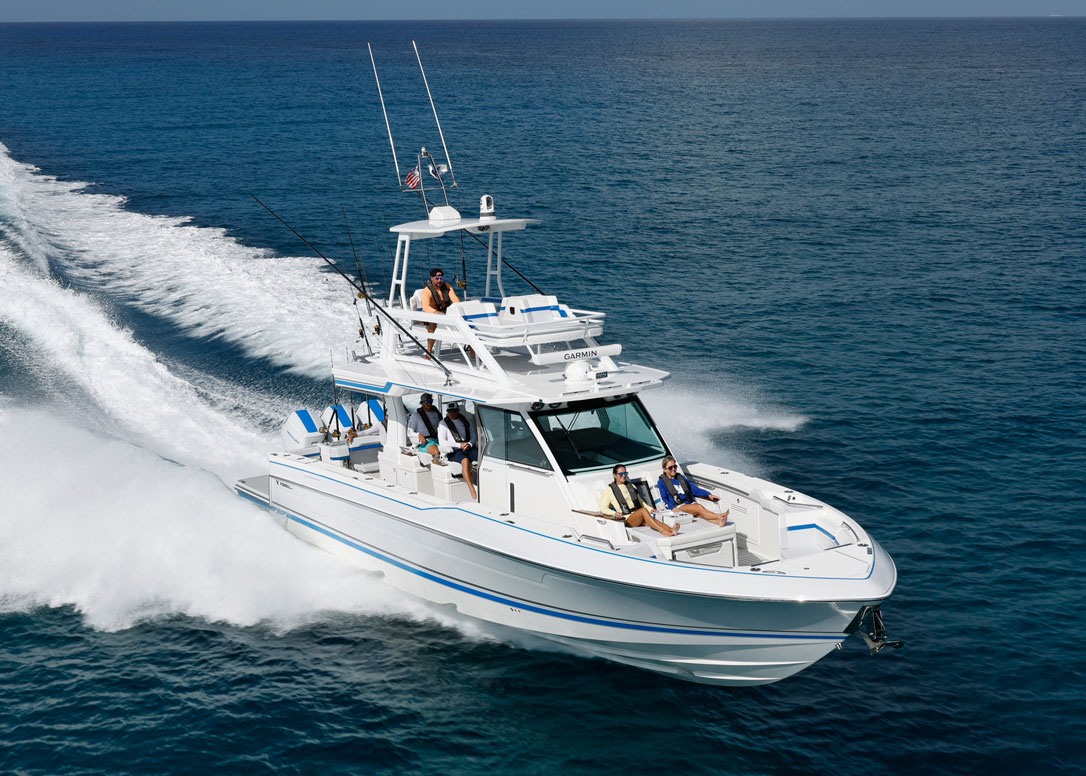
An entirely different type of fishing is available to small boat owners in the inlets and just off the beaches of the banks. Heavyweight redfish cruise the shoals near the inlets, and Spanish mackerel are in huge supply around the sandbars and shoals during spring and summer. Cobia are found in the passes during spring and early summer. And anglers who slow-troll live menhaden baits just beyond the breakers do well on king mackerel, as well as cobia, in spring and fall.
So-called wreck fishing off the Outer Banks has no peer on the Atlantic Coast, no doubt because few areas have so many ship wrecks for anglers to tap. Sunken ships literally blanket the bottom off the Outer Banks. Pirate ships, civil war vessels (including the Monitor), as well as modern craft (German submarines sunk about 100 ships there during World War II), are found from just outside the surf line to many miles offshore. Such wrecks provide game fish with superb bottom structure where bait fish hold in giant quivering clouds. On the wrecks, anglers catch bottom fish of many types: amberjacks, cobia, king mackerel, little tunny, barracuda, and at times even wahoo.
Party boats run out of most major Outer Banks ports and fishing can be excellent for a wide variety of bottom species, such as sea bass, snapper, grouper, grunts, porgies, triggerfish, amberjacks, and occasionally anglers even boat cobia and the odd wahoo.
Bluewater offshore fishing is a special angling jewel the Outer Banks offers. This is due to a unique merging of ocean currents just off the barrier islands. The Gulf Stream flows from south to north and after it leaves Florida it swings in closest to the American mainland at Hatteras. The Labrador Current flows from north to south and washes just inside the mainland edge of the Gulf Stream current off Hatteras. This melting of currents draws and wells up tremendous numbers of bait fish, and in turn attracts incredible populations of important pelagic game fish. Marlin, sailfish, king mackerel, wahoo, little tunny, oceanic bonito, blackfin, yellowfin, bigeye and even bluefin tuna all are available at certain times off Hatteras.
The bulk of the best offshore trolling is had 15 to 30 miles out, with the season generally running from spring through early fall.
Few places in North America offer better marlin fishing, particularly for whites. In recent years, Oregon Inlet has earned an enviable reputation for producing huge numbers of white marlin. Most whites average 60 pounds, but 100-pounders have been taken. In one wild, fish-filled October day for example, the offshore fleet working out of Oregon Inlet landed more than 300 white marlin! More than 1,000 whites usually are caught off the Outer Banks each year, making the area an even better bet for hard-fighting whites than the time-honored white marlin capital of Ocean City, Maryland.
Anglers working out of Hatteras and Oregon Inlets, as well as Morehead City, enjoy good spring and fall blue marlin fishing, with 500-pounders caught every year. In June, 1975, a 1,128-pound blue was caught out of Hatteras, establishing (at the time) a men's 80-pound line class IGFA record.
Sailfish action peaks from late summer to early fall. Tremendous numbers of dolphin concentrate in the ocean currents off the Outer Banks in summer and early fall. Dolphin weighing more than 20 pounds are common, and fish to 65 pounds have been taken. Yellowfin tuna are found off the Outer Banks year-round, and the hard-fighting, excellent-eating species is an important trolling target of charter boats working out of the inlets already mentioned. Top fishing for yellowfins in the 30- to 50-pound range is available in spring, and fish of up to to 200 pounds have been boated. Bigeye tuna to 253 pounds have been recorded by the Outer Banks charter boat fleet. Tremendous winter bluefin tuna fishing also is available, with fish to 600 pounds recorded, and catches of a dozen or more fish in a single day have been made. Most bluefins are released by conservation-minded anglers, however, due to low fish stocks.
The Outer Banks area also has a lot to offer freshwater anglers. Sprawling, shallow, weed-filled Currituck Sound is well worth tapping for any angler who believes the sun rises and sets only on largemouth bass water. Currituck, in fact, may well have the best largemouth bass fishing in the world available to fly fishermen. The sound is shallow and jammed with milfoil weed beds that are thick with forage and stiff with bass in the two- to five-pound range. At times, fly-rodders casting streamers, popping bugs and specialized flies such as the famed Marsh Hare (designed on the shores of Currituck) can catch 100 bigmouths per day. Bigmouths hit well spring through fall, but summer is prime time for fly-rodders with the best action occuring in the early morning and late afternoon.
Charter captains, party boats, small skiffs for hire, motels, restaurants, campgrounds and other needs of sportsmen can be found in most of the larger Outer Banks towns already mentioned, with Nags Head, Hatteras, and Ocracoke the most popular spots offering the most amenities.
Additional information on licenses, seasons, limits, fishing methods, charter services, etc. can be had by contacting the North Carolina Travel & Tourism Division, Dept. of Commerce, 430 N. Salisbury St., Raleigh, NC 27611, phone (800) 847-4862.