FoilCat: The Foiling Power Catamarans Elevating Center Console Boats
Foil-assisted power catamarans from Foil Cat are lifting center consoles boats to new levels of performance levels.
After spending most of his life on the water, running an assortment of boats, Todd Meyer was introduced to power catamarans, as a racing support boat for Grand Prix Regatta sailboats. The platform was solid and accommodating but not what Meyer felt could be an even better riding cat. He had an epiphany while riding a hydrofoil on a kitesurfing trip and realized that using a hydrofoil assist could give a power cat the literal lift that would make all the difference.
Project Background
Operating as Tarpon River Boatworks in Fort Lauderdale, starting in 2016, Meyer set his sight on building a 24’ cat and called on the design experts at Morrelli & Melvin in California to collaborate. Meyer met Pete Melvin in 2013 when his company was promoting a 45’ power catamaran RIB tender in which Meyer’s race team owner had interest. Morrelli & Melvin have been working on power catamaran hydrofoil technology since the 1990s, constantly developing, testing, and improving on the current state of the art. The company has created approximately 100 foil-assisted power catamarans, and numerous fully foiling sailboats and participated in the last four America’s Cup events as naval architects. Melvin believes that their version of foil assist, meaning the boat does not rise out of the water like race sailing cats, has better handling and sea keeping characteristics; their asymmetric hull shape and wider span reduces drag.

Above: The efficiency of foiling boats, hydrofoil systems and stepped hulls are illustrated in the graph above. Graphic by Morelli & Melvin via FoilCat.
Developing A Hyrofoil Catamaran Boat
Together Morelli & Melvin and Meyer developed a foil-assisted power catamaran concept and found the ride that Meyers had envisioned. But 24’ was just a bit too small for the market—especially as bigger outboards and catamarans were making their mark with the performance-oriented fishing and cruising customer. Meyer moved his operation to Cape Canaveral Florida and aptly named his new model, Foil Cat—a 34’ scaled up version of his initial boat—the first stepped hull cat with foil assist.

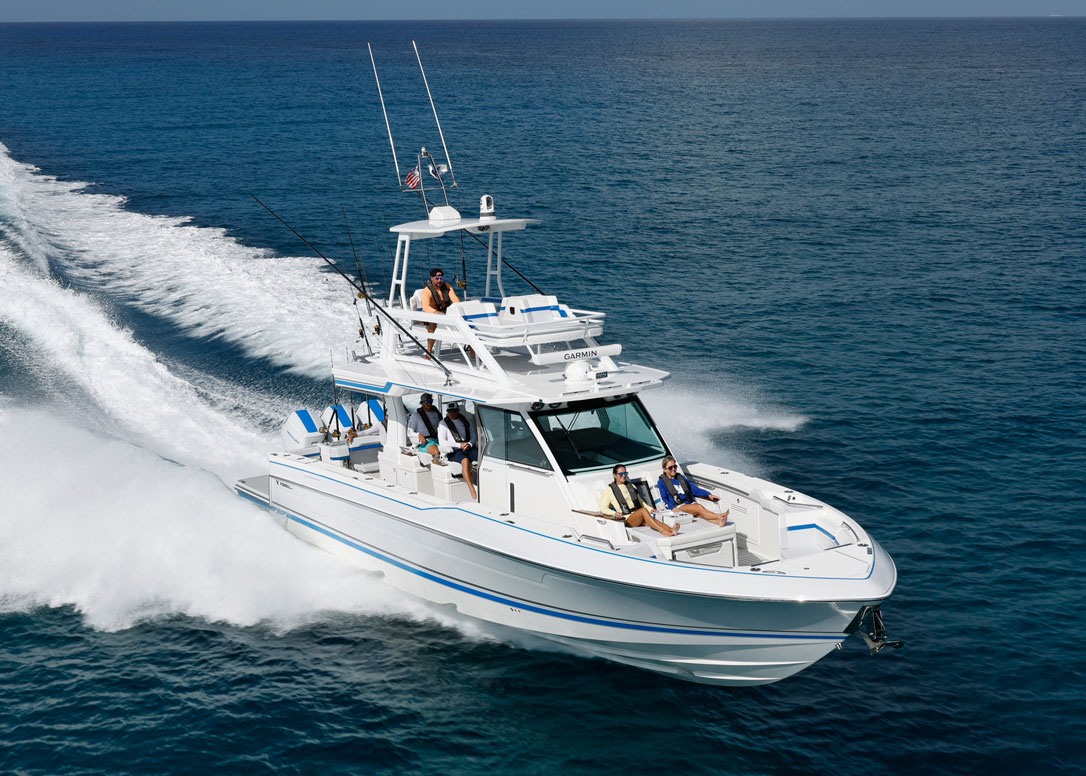
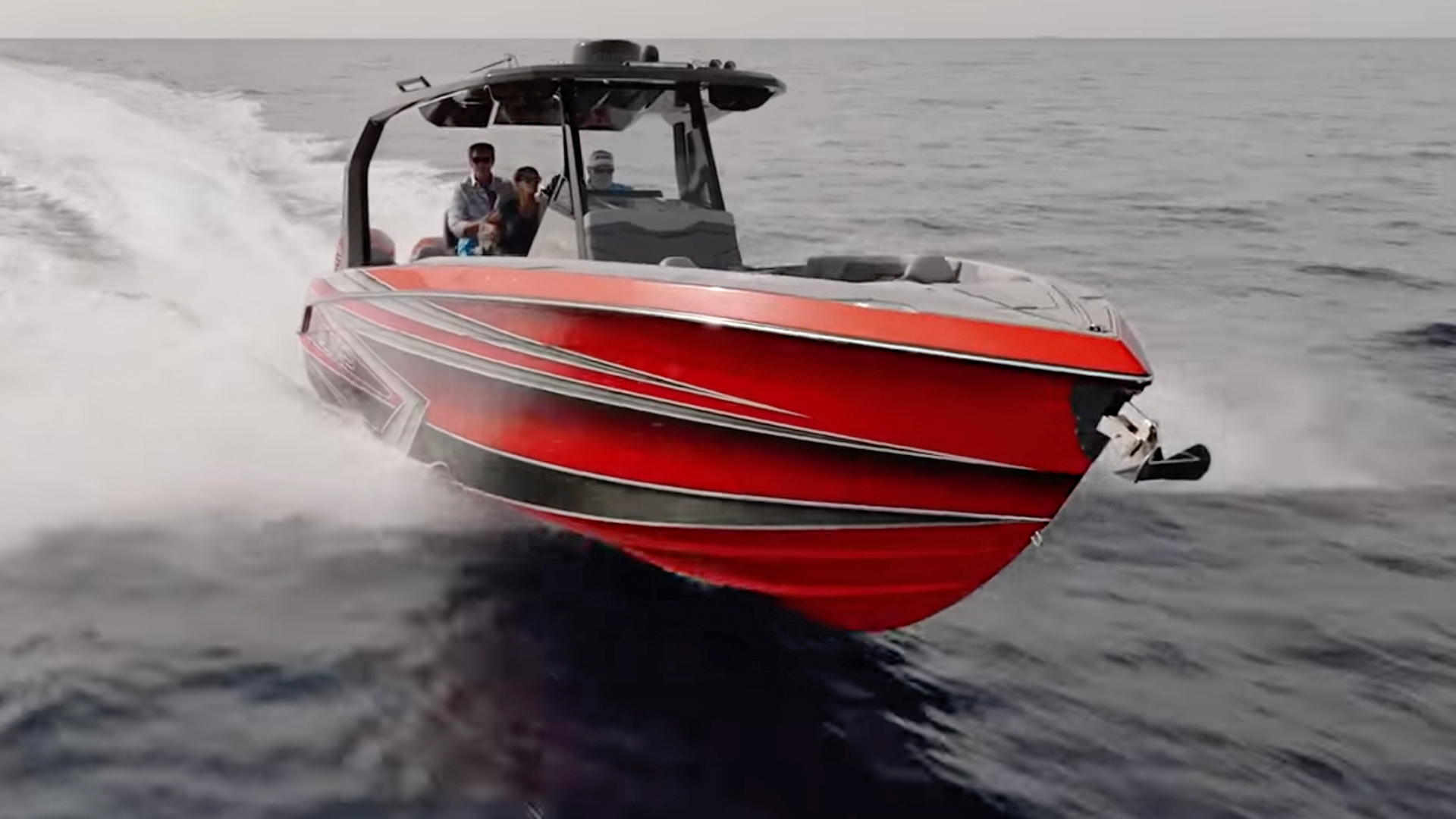
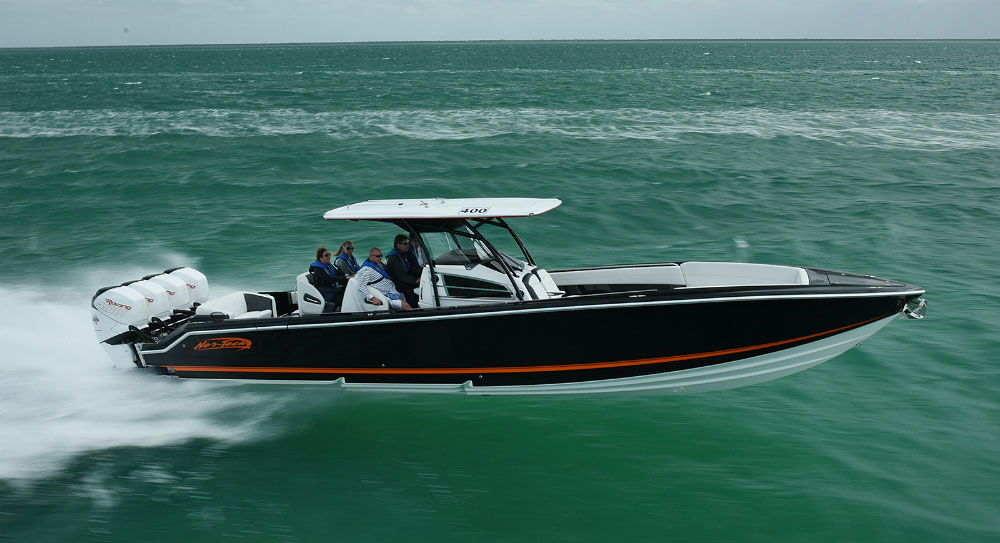
Above: The FoilCat, a center console power catamaran boat with a foiling system is helping to elevate performance on open layout day boats like never before.
U.S. Military Special Forces Utilizes FoilCat Design
One of the first market segments to take interest was the U.S. military, as Special Forces units take a daily beating in training—not to mention their missions. The foil assist offers a much smoother ride with less pounding while the solid epoxy infused construction gives the boat strength and a 12’ beam adds stability. An interesting feature is the robust wide rub rail (called a “collar”) made of Polyurea coated foam that is chemically similar to a durable truck bed liner. Meyer says it can rub against paint or gelcoat and not leave a scratch—a practical, not cosmetic design. Using mainly Made-in-the-USA raw materials, including 316-grade stainless steel, Gemlux hardware, Garmin electronics, ProCurve windshield and Llebroc seats, Meyer created his boat with a small, dedicated and experienced team.
FoilCat Performance Numbers
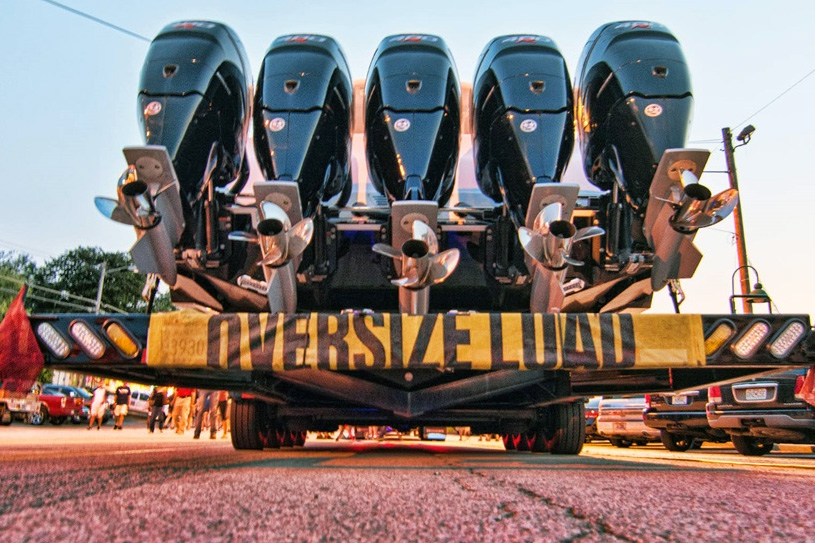
The Foil Cat holds 400 gallons of fuel and with twin Mercury 400 Verado engines, has a 600-700-mile range, cruising at an easy 32 mph. That horsepower and speed provides an economical 2 mpg burn. The amidship location of the 28” foils come into play as the boat planes, balancing the amount of boat in the water, both foils and propulsion units, providing a 40% reduction in drag.
Tarpon River Boatworks boasts that at 40 MPH, the FoilCat 34' power catamaran gets almost double the miles per gallon (MPG) than its closest competitors on the market today, estimating between a 40-50% more efficient fuel burn rate, giving owners increased range at lower costs.
Hull Number One: A Quick Look
Hull #1 is set up to fish with a gelcoat hull, EVA foam decking, a transom bench seat with a removable back, conveniently inset into rod holders; the seat is framed by two 35-gallon live wells, which can optionally become storage. Gunwales hold 10 more Gemlux Bluewater rod holders with matching outriggers as an option. Six deep fish boxes/storage compartments in the floor add function and padded coaming adds comfort as well. The helm seating on Hull #1 has three Llebroc seats but the next boat will be equipped with Shox shock mitigating seating. The bow lounge has large storage beneath for rafts in the military version with an option for a cooler for anglers or cruisers. Starboard and portside doors on the console, with sturdy stainless pantograph hinges, like an airplane door, open to reveal a surprisingly large and tall head. The bow and anchor locker, also covered with EVA foam, can serve as a solid casting platform.
Helm Controls
The black helm is covered by a sizable carbon fiber T-top and the dash has an array of three, 16” Garmin screens (two, 22” screens as an alternative), two inductive phone chargers, a waterproof ROKK USB charging port, Mercury instruments, Optimus 360 steering with joystick, Skyhook and Fusion controls. This boat is loaded with two 10” and two 12” subwoofers and eight 7.7” speakers, so it has a powerful sound to match its powerful looks. Full customization is available, from electronics, instrumentation, engines and layout—the choice is the customer’s based on the boat’s intended use.
Sea Trial Recap
The boat handled some serious Atlantic chop as we headed out in blue water and with no bow steering or “sneezing,” we all stayed dry. The cat’s attitude remained stable and it cut turns with surprising smoothness. A slight adjustment of trim yields increased hull reaction, so the driver may experiment with trim based on water conditions to truly feel the effect of the foil. While top speed is approximately 60 mph with the 400s, we comfortably rose to over 50 mph loaded with fuel and seven passengers—all impressed by the ride.
Melvin noted that some people fear that hydrofoils can hit underwater obstacles, break and sink a boat, but he assures that the foils are a solid piece of sturdy metal, rigidly attached to the hull. The foil may get scratched, but its sharp leading edge also keeps it from catching debris and any straggling seaweed is generally shed above 20 mph. Melvin also pointed out that the price of a foil-assisted hull provides long-term value due to reduced drag and increased fuel efficiency and can even justify purchasing a lower horse powered engine, which can save immediate money—and future fuel.
With Hulls 2, 3, 4 ready to build and another on order, as a small and nimble builder, Meyer can customize many features and welcomes inquiries at FoilCat.
➤ Read more about foiling catamarans.
➤ View all power catamaran boats for sale on boats.com today.