The Outboard Expert: Don't Cheap Out on Oil
Saving a few bucks on the most important fluid in your engine can cost you big-time down the road.
August 21, 2008

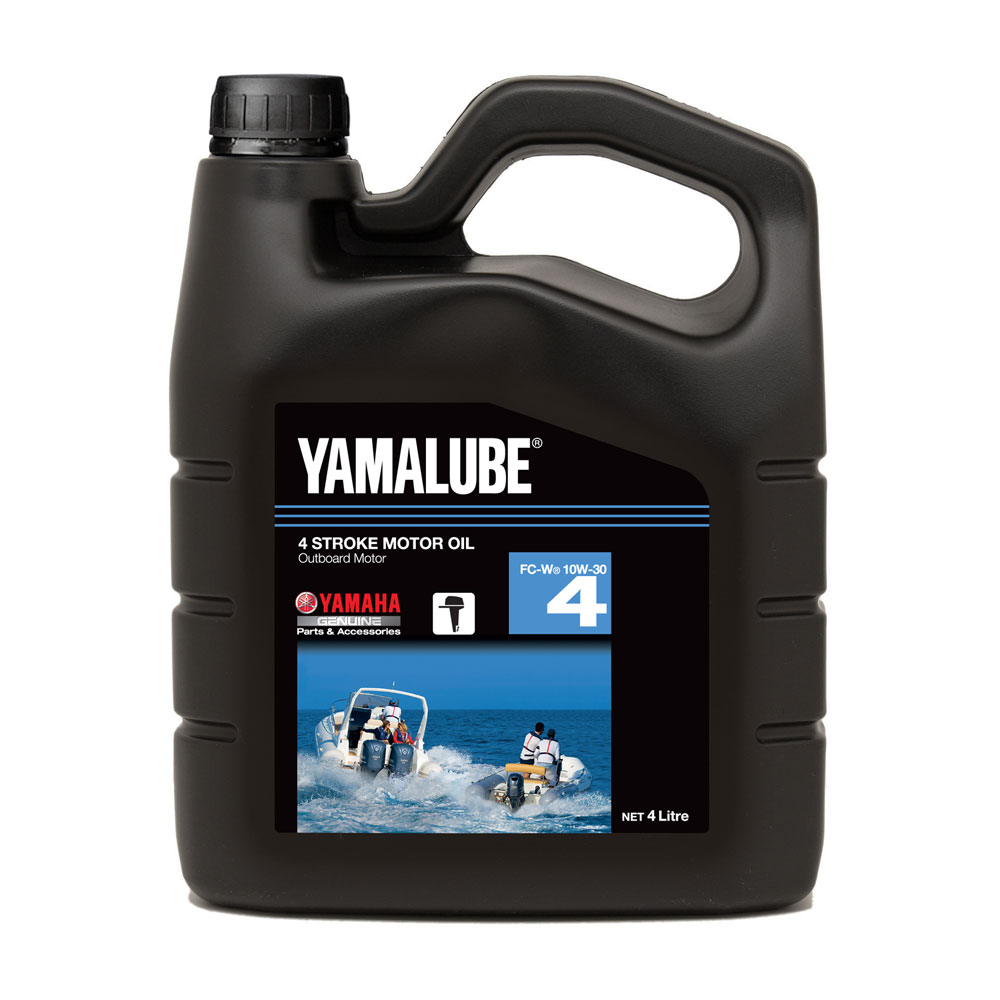
The Good Stuff — the two-stroke oils offered by the outboard OEMs don't just meet the minimum standard of the TC-W3 rating, they exceed it. By a long shot. If you love your motor, this is the stuff to use.
Time for another tale from the trenches of outboard service. This time we have customers who are trying to save a buck by buying inexpensive two-stroke oil, only to have it end up costing more in the end. The stories come straight from a fully-certified technician working at a dealership in Wisconsin that specializes in prepping bass and walleye rigs for tournament anglers.
Lube Loony
A customer called the shop to ask the technician if it would be OK to run a discount-price two-stroke oil in his new Mercury Optimax 200, which is rigged to a Triton walleye boat.
"I told him I did not think that was a good idea," said the tech, "and suggested that he stick with the Mercury oil that we put in the boat when he took delivery."
A few weeks later, the customer is at the shop door. His motor makes a big cloud of white smoke every time he starts it up, hot or cold. And it makes the same cloud when he puts the boat on plane after a no wake zone or trolling.
"So assuming that he has followed my advice, I start to go through the diagnostic routine, checking the oil pump and other related systems," said the tech. "But then I opened the oil tank and noticed that the oil did not smell like Merc oil."
The tech removed the tank from the boat and poured out the oil.
"It was really thin," he said. "You know how Merc or Yamaha oil is pretty thick and almost sticky? This stuff poured like water. I knew right away that he'd gone ahead and used that cheap oil."
When confronted with the evidence, the customer admitted to using the oil, which I'll call "Brand X" because I can't afford a lawsuit. This is a major marine discount brand oil.
"So we clean the oil tank, and re-filled with Merc oil," said the tech. "End of problem. Instantly."
So what, exactly, was the problem?
"I just think that because this oil is so thin, maybe too much gets pumped and then it does not stick to the engine parts like it's supposed to," said the tech. "Instead of clinging to the bearings and the rings, it's flowing down to the lowest point in the engine, which is the bottom of the crankcase. This happens when the motor is either shut down, or is idling. On a Merc Optimax, the bleed circuit then takes some of the oil back to the top crank bearing, and some of it goes to the intake. So he gets this shot of oil in the intake, and it makes the smoke."
If the oil is not clinging to the moving parts of the engine, is it doing a bad job of lubrication? Our tech thinks that may be the case.
"Last week I had a Merc Opti 250 XS come in here that had just 200 hours on it, and it had one ruined crank bearing journal," said the tech. "The other bearings were blue, so I'm guessing they were hot. Everything checked out on the oiling system. The owner said he'd been using a full-synthetic two-stroke oil sold by a major oil company. All I know is that those bearings are usually bullet-proof."
Not Created Equal
If you read your outboard owner's manual, it will specify the use of a two-stroke oil that carries the NMMA TC-W3 rating. I don't think, for anti-trust reasons, an outboard manufacturer can force a customer to use its house brand of oil. So it should be OK to use any TC-W3 oil, right? Technically, yes. But lube engineers I've talked to over the years have always pointed out that the TC-W3 rating is a minimum standard, and that the oil sold by the engine manufacturers exceeds that standard by a significant margin, due to a better additive package and higher-quality ingredients. Because the company name is on the bottle, Mercury, BRP, and Yamaha have a vested interest in making sure they are selling the best-quality product.
The discount brand is mostly concerned with selling as much oil as possible, and because it doesn't have the cachet of a brand name, is has to sell on price. There's a reason that oil costs less. And yes, I know that Merc and Yamaha don't really manufacture their oil. It's blended by a lube vendor, but it's blended to meet a specification and is frequently tested.
Those same engineers — who have also evaluated every brand of oil on the market - are also quick to point out that some of the other two-stroke lubes are pretty good oil. But how does the customer know which is the good stuff? He doesn't. But you can't go wrong with an OEM oil, even if it means putting YamahLube in your Merc.
I checked an on-line marine discount house and found our Brand X oil offered for $3.49 a quart. The same business offers Merc Quicksilver oil for $6.99, and Quicksilver Premium Plus (which our tech likes in the Optimax) for $7.65. So that's twice the cost of the cheap oil. But if you've just spent $40,000 on a new boat-motor-trailer, why would you even consider trying to save a few bucks on oil and risk a damaged engine, and even worse, missing time on the water? It's just not worth it.
Editor's Note: Charles Plueddeman is the editor at large for Boating, the nation's largest recreational boating magazine.