Kawasaki 1100 STX D.I.
Kawasaki's 1100 STX D.I. looks and feels refined
October 17, 2001
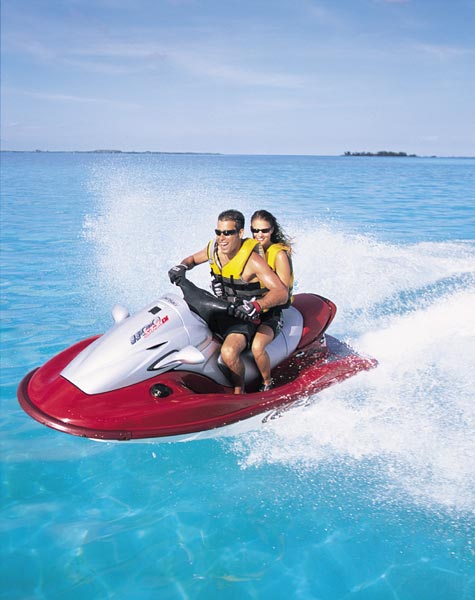
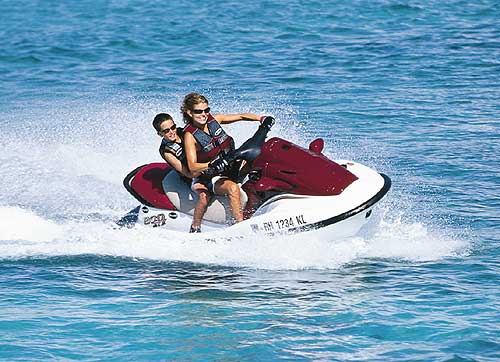
The nimble Kawasaki 1100 STX D.I. is a three-seater that delivers much of the performance of a two-seater.
Since it was introduced three years ago, Kawasaki's 1100 STX has been a pure workhorse. That's not to say the bright red watercraft with silver and gray accents wasn't attractive, but the three-seater didn't have the posh look and feel of its chief rival, the Sea-Doo GTX. On the other hand, it was a stronger choice for towing water-skiers and wakeboarders, and actually had a flip-down step on the stern for reboarding in deep water. The 1100 STX also felt tough enough to handle the surf (where legally allowed, of course) and was every bit a match for the GTX in touring. It was, in more than one rider's opinion, the most versatile PWC on the market.
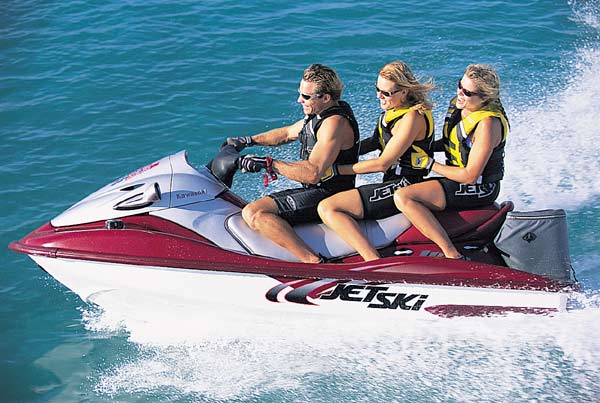
The 1100 STX D.I. has more than enough power to handle its rated three-person capacity.
To lose that versatility in the name of style or technological "progress" would have been a big mistake, one that Kawasaki didn't make with its top model for the 2000, the 1100 STX D.I. All the versatility, right down to the automatically retracting boarding step, remains in the new PWC. Now, however, it boasts better overall performance and a decidedly more upscale look and feel.
The performance improvements come from two different but equally important areas. The first is fuel injection. The 1100 STX D.I. has a Ficht direct injection system, which Kawasaki licensed from Outboard Marine Corp. (Ficht is the system in all OMC's direct-injection outboards.) According to Kawasaki literature, the system reduces emissions more than 70 percent and dramatically improves fuel- and oil-use efficiency — more than one-third as compared to the same engine (1,071 cc three-cylinder two-stroke) with carburetion rather than fuel injection.
Those are the "green" benefits of the system. On the performance end of things, the result is light-touch throttle response, smooth acceleration and easy speed control, which is a great benefit for towing boarders and skiers.
The second set of performance improvements comes straight from the hull. For 2000, Kawasaki redesigned the PWC's bottom with longer strakes for better lift and tracking, and a rounded keel for a softer ride.

Precise throttle response and control make the 1100 STX D.I. ideal for towing skiers and boarders.
During a ride from Dana Point to Oceanside in Southern California, the 1100 STX D.I. demonstrated all of these performance qualities. Conditions for the ride, glassy with widely spaced 4- to 6-foot swells, were perfect for testing. Running 50 mph (according to the digital speedometer) in following seas was comfortable, as was taking them at quarter. A little less throttle made head-on running a breeze, and when the watercraft did catch air off big rollers it landed as softly as could be expected from a 678-pounder with a 185-pound rider.
Top speed for the 130-horsepower watercraft, according to Stewart Thomas of Kawasaki, is 57.2 mph as recorded on radar. That seems a reasonable claim, given that the speedometer of the 1100 STX D.I. registered speeds a few miles an hour more than that during portions of the ride.
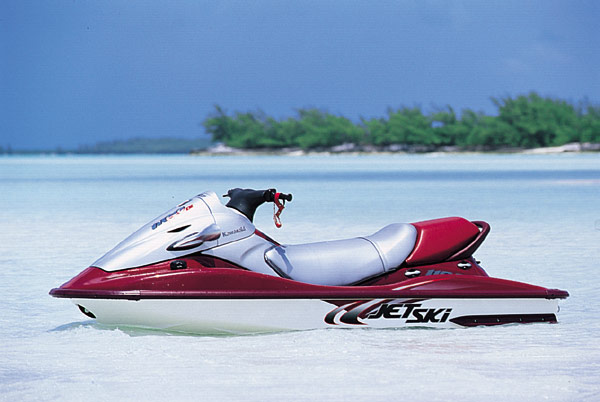
A deeper, royal red color and silver highlights give the 1100 STX D.I. an elegant look.
Aesthetic improvements come largely from the watercraft's deck, which also was completely redesigned for 2000. The obvious change is deeper "royal" red for the deck and hull. Less obvious to casual observers are changes in the hood and foredeck. In years past, their slope was constant to the rubrail. The hood (silver for 2000) of the 1100 STX D.I. stops at a semi-flat section in the foredeck, which then transitions to a shallow molded well. The result is a more curvaceous, almost Euro-style look that carries back into the footwells and all the way aft to the boarding platform.
In terms of instrumentation, Kawasaki has gone high-tech with a liquid-crystal display that shows well in direct sunlight. While the instrument package monitors a number of engine functions, it reads out speed and rpm simultaneously, which makes it easy to compare the two while underway. Another nifty feature at the watercraft's helm is its magnetic keyed ignition switch hidden in the glove box. The switch might help stop thieves or even children with big plans but no permission from riding off with your watercraft.
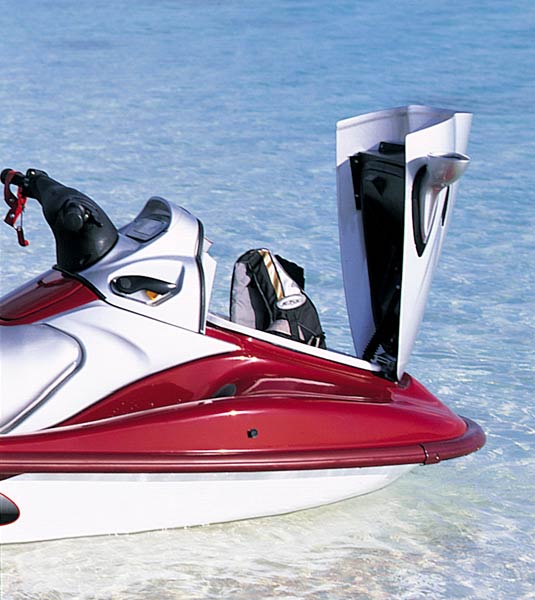
For stowage, the primary compartment in the 1100 STX D.I. is under a hinged and shock-supported lid in the bow.
For touring, the 1100 STX D.I. is set up to handle a cooler on the aft deck. In addition to the previously mentioned glove box, there is a large forward stowage compartment. The manufacturer did a good job supporting the hinged hood for the compartment with a hydraulic shock.
There's always a risk of losing what was best in an existing model when a manufacturer creates a completely new one. Kawasaki avoided this pitfall with 1100 STX D.I. By combining bold styling, smart direct-injection technology and careful hull design, the manufacturer reinvented a popular platform — and made it better.
Boat specifications
| Length: | 122.6" |
| Width: | 46.5" |
| Height: | 40.2" |
| Dry weight: | 678 pounds |
| Rider capacity: | 1-3 |
| Fuel capacity: | 14.4 gallons |
| Oil capacity: | 1.3 gallons |
| Stowage capacity: | 23.5 gallons |
| Engine: | Kawasaki two-stroke with Ficht fuel injection |
| Horsepower/displacement: | 130 hp/1071cc |
| Jet pump: | Axial flow single stage |
| Price: | $8,499 |
For more information
Kawasaki Motors Corp.
9950 Jeronimo Road
Irvine, CA 92618-2084
(949) 770-0400