Sunglasses: How To Find the Perfect Pair
Sunglasses come in a dizzying array of styles, shapes, and lens colors. So how do you choose what’s best for you?
Walking into a Sunglass Hut or even a West Marine, it’s easy to be overwhelmed by the choices available in the sunglass cases. Large, small, round, square, plastic, glass, green, amber... how is it possible to find the Perfect Pair for you?
And since the price of some top quality sunglasses can come close to a monthly boat payment, it’s worth investing some time and effort in the search. All sunglasses are not created equal, so let’s dive in and figure out the most important features.
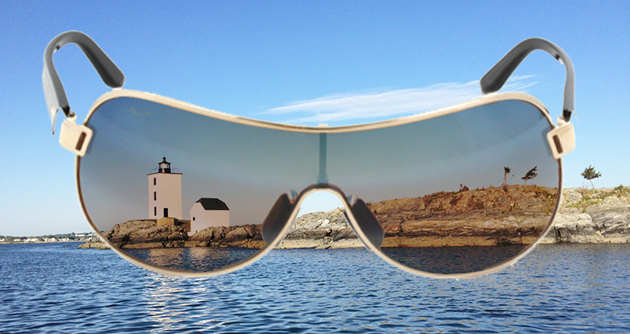
Yes this is Photoshopped, but it does give an idea of what the perfect pair of sunglasses can do for your view—in addition to protecting your eyes from UV damage.
UV Protection
The most important sunglass feature for on the water use is to block UV rays, which immediately weeds out most of the cheapest options. Sunglasses are much more than a just a fashion statement; they are SPF 50 for your eyes. Water reflects UV very well, and UV is intensified when it’s reflected. (If you’ve ever noticed that a half hour of sun time on the boat gives you an equivalent sunburn to three hours in the back yard, even when wearing a large hat, reflected light is why.)
Wearing good quality sunglasses when you’re on the water, even on cloudy days, can make a huge difference to eye health over a lifetime of boating. Look for pairs that advertise their UV protection with text like this: “Lenses block 99% or 100% of UVB and UVA rays.”
Surprisingly, the film that blocks out those UV rays is clear, so tint and color don’t make any difference. They do, however, matter in terms of what you can see best, as we’ll see when we dig into lens color.
Polarization
Another must-have for boating sunglasses is polarization. Polarized lenses cut out all the light from certain angles, which reduces glare off water, car hoods, or anything else that’s shiny. To test if a lens is polarized, put on one pair and hold a second polarized pair up in front of your eyes, so the two sets of lenses overlap. When you rotate the second pair 90 degrees, the lenses should completely black out. This is a good way to test questionable brands that advertise polarization.
Although glasses that are polarized usually also protect from UV, these are in fact two separate issues, so make sure you’re covered on both. And don’t trust me that polarization is important; even WebMD says “Opt for polarized lenses if you spend a lot of time on water.” And fish-slayer Lenny Rudow says “a good pair of polarized sunglasses is imperative. Not only is it necessary to protect your eyes, it’ll help you spot more fish. ‘Nuff said.” (See Lenny’s choices for Sunglasses in 2014)
There is a downside to polarization; depending on the quality of both the lens and your eyes, it may be difficult to read screens like your cell phone or chartplotter. But the value is worth the aggravation of removing them to read such devices, and your eyes will thank you by being much less tired at the end of the day.
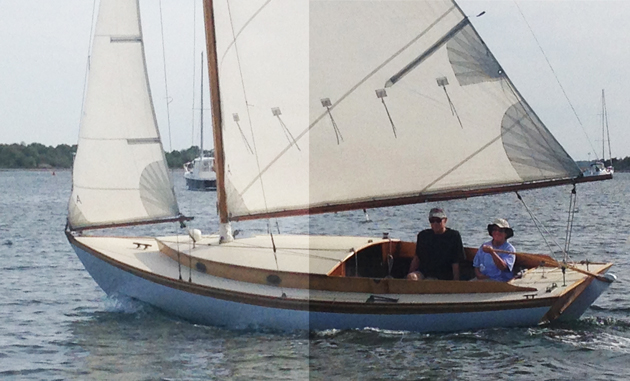
The right half of this photo mimics how polarization will reduce glare and increase contrast.
Frames that Fit
The third factor in selecting the Perfect Pair is how they fit your face. And the only way to find that perfect fit is to try on different pairs—a lot of different pairs. A style that looks great in the case or in a photo may not appeal so much in the mirror. Time, patience, and hopefully a helpful shop clerk will help you choose your next favorite pair of shades, rather than yet another pair that will just gather dust in the glove compartment or console storage bin.
When you try them on, look in the mirror first and then look outside. Even if the view only includes a shady parking lot, you’ll get a sense (by checking the view with and without the glasses) how they handle glare and color. And don’t forget to move your head around to make sure they stay on. For me, it’s also helpful to swoop them up on my head, since that’s my default storage location; some frames pick up annoying strands of hair in the nosepieces or hinges.
Frames come in a wide variety of materials, everything from titanium to cheap plastic. Though good quality glasses will usually be set in good quality frames, the weight and fit and durability of those frames varies as widely as the styling. Lightweight is great, until they are dropped or stepped on.
There are so many variables in how a pair of glasses will fit that the only way to find something that is comfortable and looks good is to try them on—a lot of them. That makes it almost impossible to buy your next Perfect Pair online, unless you’re replacing an existing pair with the same model.
Lens Material
What your sunglass lenses are made of also requires some thought. Glass is very scratch-resistant and has excellent optics, but these will also be the heaviest. Acrylic lenses are the cheapest, but also offer the most distortion and least durability. In between, companies offers lenses in a variety of "proprietary" plastics, including polycarbonates and polyurethanes. Polycarbonates are lightweight, inexpensive, and durable, though their optics won't be as good as glass. Polyurethane combines those benefits with excellent clarity, at an increased cost.

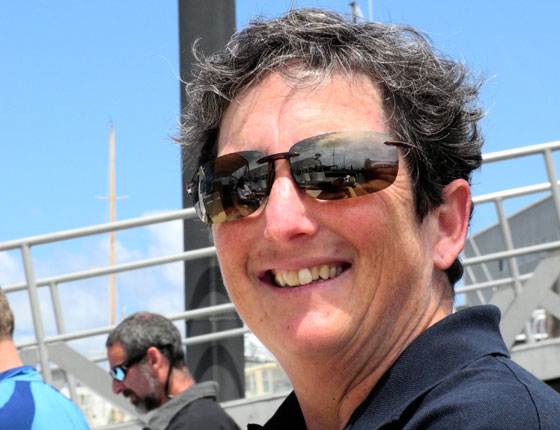
Here are three different face shapes wearing glasses that fit. There's only one way to find that perfect pair for yourself... try on a lot of different styles. (Note the three different lens colors, as well.)
Lens Color
There's one final and very important factor for choosing your Perfect Pair of boating sunglasses: lens color. Nowadays it seems like you can find sunglasses with every lens color imaginable—even yellow. So what’s best for on the water use?
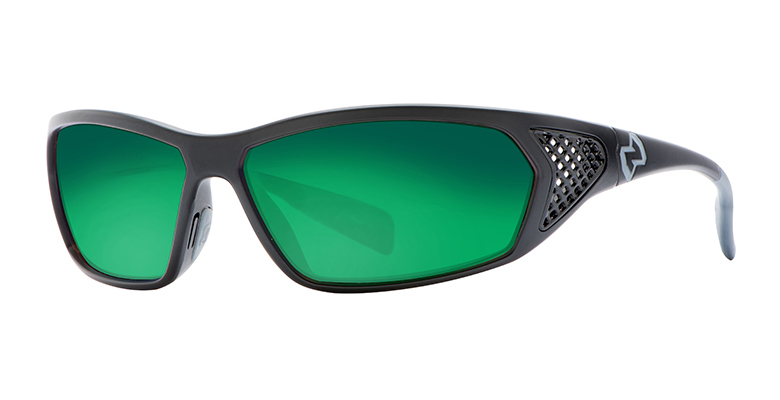
Once upon a time, it seemed like sunglasses were all the same color: the dark green of Ray Ban aviators. These provide the least amount of color distortion while reducing glare, and they are still popular today because they can handle a wide range of activities: driving a boat or a car, hanging out at the beach or at a campsite, sitting in your favorite outside cafe.
When grey lenses came on the scene, they quickly gained popularity with boaters because they were useful in a wider range of conditions. The lighter tint allows wear in overcast conditions, which reduces eye fatigue on those days when clouds are chasing sunshine across the bay. Clouds reduce the glare, but they don’t block the harmful UV. Gray lenses also don’t distort colors.
And then there’s my personal favorite: amber, which is also described by various sunglass manufacturers as bronze, copper, and brown. When I first saw these shiny red-brown lenses, I figured they were more for looks than for vision. What I’ve since learned is that a slight reddish tint improves contrast and depth perception. While the colors may not be photographically accurate, you’ll be able to spot variations in the water that you’d miss with green or gray lenses. Whether you’re looking for fish, big waves, wind puffs, or something more serious like the head of a person overboard, you’ll be glad for the extra contrast and clarity.
I didn’t fully appreciate the advantages of amber until I went back to gray lenses for the first day of a Caribbean sailing adventure. Even with such excellent contrast (classic blue sky, bright sunshine, and whitecaps), I had trouble reading the wind on the water. I chalked it up to the rustiness brought on by a long winter—until the next day when I went back to amber lenses again. And there they were, those telltale dark patches that warned me of an approaching puff. In the same exact Groundhog Day Caribbean conditions, it was really incredible how much more contrast I could see.
There’s a lot to consider when it comes to choosing your next pair of boating sunglasses. (And, as one friend points out, you can only be absolutely positively sure you've found your Perfect Pair a few minutes after you step on them.) UV protection and polarization are a must, but there are still a lot of variables in frame, fit, and lens color. The bottom line is this: find a pair that’s comfortable and will stay on your face. Your eyes will thank you at the end of each and every day.
We've written quite a bit about sunglasses over the years. Read more:
- The Best Five Sunglasses for Boaters: Costa Del Mar vs. Oakley vs. Ocean Waves vs. Onos vs. WileyX
- Maui Jim Sunglasses: “Pure” Forgetfulness
- Fishing Friday: New Sunglasses for 2014
- Focus on Sunglasses