J/Boats J/110: Bob Perry Design Review
J/Boats J/110 will have Racers-turned-cruisers find this an appealing design
August 24, 2000
J Boats' new 36-footer, the J/110 (as in meters), is similar to the 41-foot Tartan. Both companies are aiming the new boats at performance-minded cruisers. I think Rod Johnstone, the designer of all the Js, may have a slightly elevated idea of performance, which makes sense given the racy pedigree of the J Boats line.

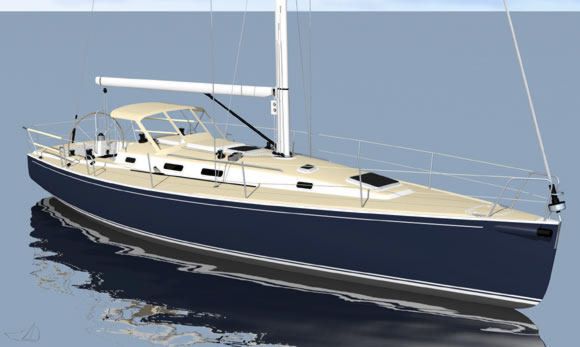
The J/110.
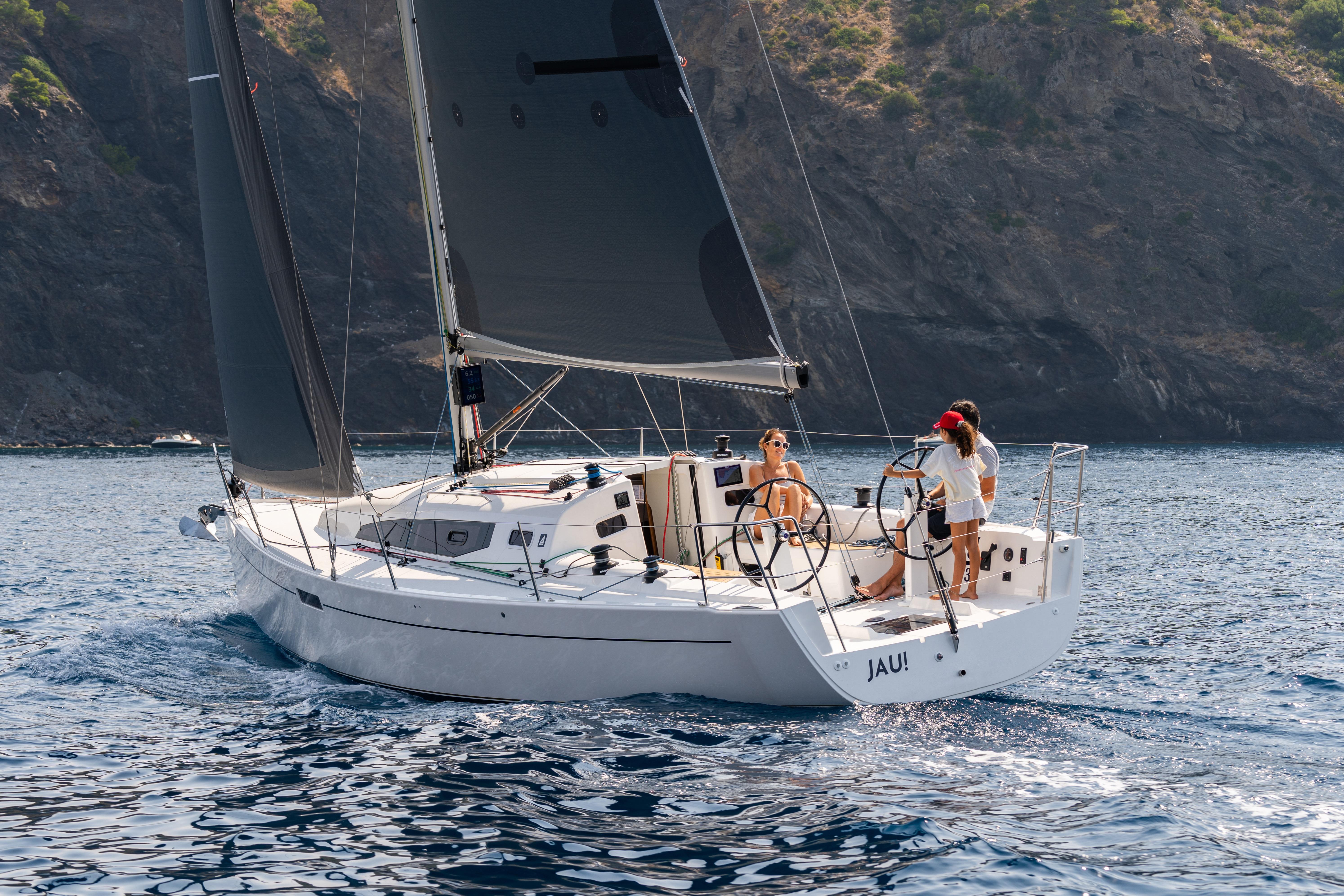
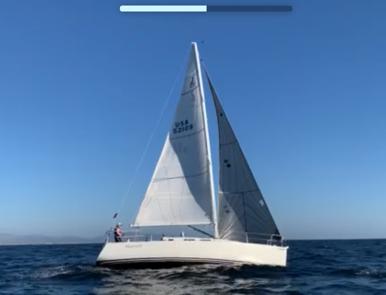
The sail plan shows a near-masthead rig designed to keep the big asymmetrical-chute head well clear of the genoa furling gear during gybes. This rig would also give you an easier mast to bend when you want to shape the mainsail. The mast is well forward and conveniently steps through the head, so any drips and leaks at the partners will fall into the perfect draining area, the shower pan.
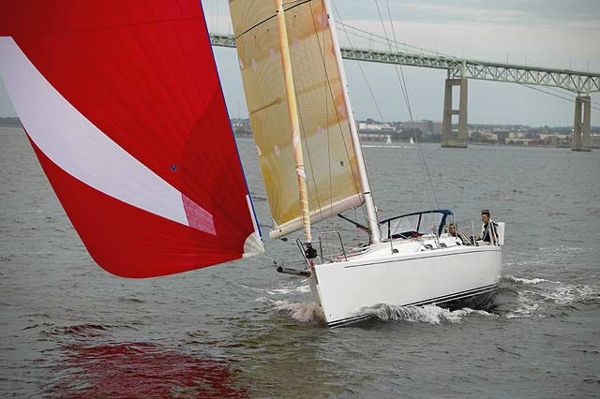
I always like end-boom sheeting and keeping the traveler close to the helmsman. The 5-foot pole is retractable, and the chute is in a sock, making it easy for a couple to fly. This sail is gybed the same way you would gybe a big genoa — you just pull in the new sheet. There is a lot of horsepower contained in that big chute. The SA/D is 19.1. Here's another flattish sheer, but I like the general slope and shape of this sheerline.
The J/110 comes with the option of a carbon-fiber mast from Hall Spars. This would cut the weight of the mast tube in half and have the equivalent effect of putting two beefy crewmembers on the rail. Its effect on stability would also be quite noticeable, along with the resulting reduction in pitching moment.
The D/L of the 110 is 182. It is good to have an appreciation of displacement as a function of accommodation volume and not just a benefit of lightweight, high-tech building methods. If you want a light boat, say with a D/L less than 150, you are going to have to use composite-cored panels throughout the entire boat if you want a complete interior, and you may still find there is insufficient volume for the interior layout that you need to sell to cruisers. The first thing that goes is tankage, then general storage areas. We know that cruisers tend to overload their boats, so it is senseless to design to a 10,000-pound displacement if the boat will weigh 12,200 pounds when ready to go cruising. It's not by accident that the Tartan and the J have very similar D/Ls.
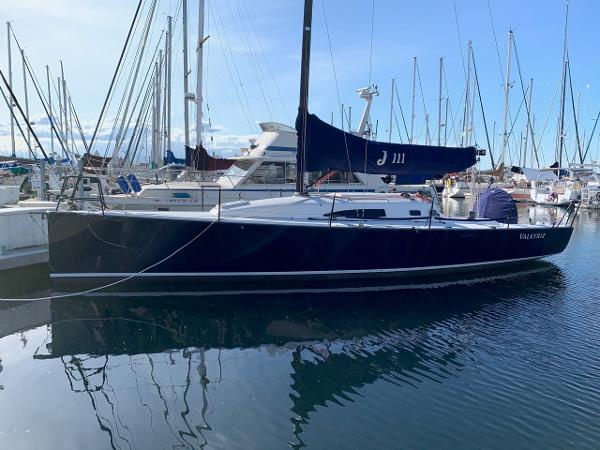
In plan view the hull shows a flat run at the transom and moderate beam aft. The deck line forward is not too fine. The moderate overhangs add to this design's pleasing look. There are two drafts available. Each keel is bolted to a deep sump molding into the hull. This solves the problem of a bilge sump in a relatively flat-bottomed boat.
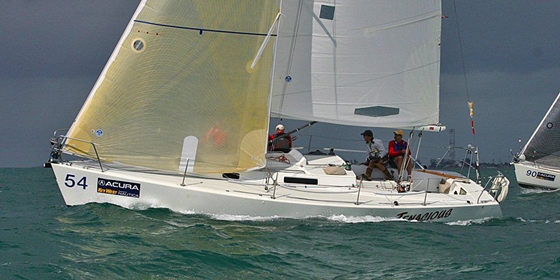
The cockpit is ideal for one couple. The secondaries are close to the wheel, as are the traveler controls and mainsheet. I would prefer to switch the primary winches and the secondaries so that the bigger winches could be reached from the wheel. This would make singlehanding easier. The halyards are all led aft to two winches alongside the companionway. I love wide side decks, and the 110 has them. You only need headroom over the areas where you can stand. Extending cabintrunks outboard over settees and joinerwork may add to the look of roominess, but it detracts from the workability of the deck and prevents you from bringing the genoa tracks inboard where they are needed for close-winded sailing.
The interior is a direct take from "basic layout A." The quarter berth has been expanded to double size by extending it under the cockpit well and tucking it aft of the engine box. There is access to the single head from either the main cabin or the forward stateroom. Don't let the simplicity of this layout fool you. It is about perfect.
Built by TPI with its resin-infusion process, the J/110 is cored with Baltek for a light, strong structure.
This boat will appeal to sailors who have raced and want to get involved with short-handed cruising. I volunteer to take the boat for three weeks in the BVIs for testing.
Racers-turned-cruisers will find this an appealing design.
Boat Specifications
| LOA | 36'; |
| LWL | 31'; |
| Beam | 11'; |
| Draft | 5'11" shoal 4'11"; |
| Displacement | 12,200 lbs.; |
| Ballast | 4,500 lbs.; |
| Sail Area | 633 sq. ft.; |
| SA/D | 19.1; |
| D/L | 182; |
| L/B | 3.27; |
| Auxiliary | 28-horsepower Yanmar; |
| Fuel | 21 gals.; |
| Water | 65 gals. |
 This story originally appeared in Sailing Magazine, and is republished here by permission. Subscribe to Sailing.