Tunks Knot
Tie a heavy leader to a light line
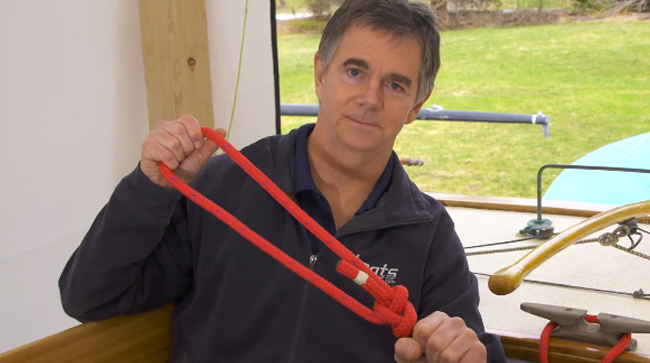
When you want to tie a heavy leader to a relatively light line — say a 200-pound leader to an eight-pound running line — here's a knot to master. This knot can connect mono to mono, mono to Dacron, or Dacron to Dacron equally effectively. It's easy to tie and there are no tag ends left over to catch on the guides during a cast. The connection between the leader and the running line is made without an actual knot in the running line, so the connection is very strong. The double line can be adjusted after the two lines are joined.
The Tunks knot is specially suited to fly-lining baits or surf casting heavy baits or lures. With the former, it helps to have a few inches of leader in the guides before casting so the leader and not the light running line absorbs the stress at the tip-top during a cast. In surf casting, many anglers like to have a few turns of leader around the spool so that the considerable strain on the line during the cast is absorbed by the heavier leader. This arrangement is often called a shock leader, or shocker. in addition to shock absorbtion it acts as a safeguard against a large fish wrapping up in the line. With a long leader, the line is protected from wild slashing of a fish's tail.
Above all, shock leaders boost your confidence. No matter how hard you cast, the line remains intact during the power stroke. The generous safety margin protects terminal tackle and other fishermen. The Tunks knot is very small in relation to leader size and the end of the leader is not folded back on itself so it can't hang up on a guide during the cast.
To tie the knot, follow these steps:
1. Double the main line with a Bimini Twist or Spider Hitch into a loop that is long enough for the fishing you intend to do. If a record is in the back of your mind, don't forget to refer to the IGFA specifications for a double line. The Bimini seems to work better on Dacron and the Spider better on mono.
2. Strip the amount of leader material you need off the spool, but do not cut it.
 |
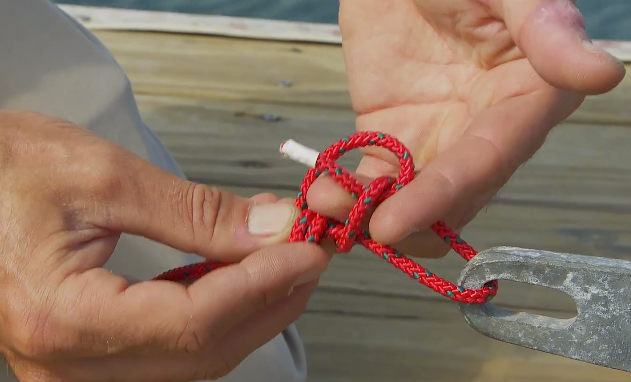
| 3. Make a loop in the leader material and then pass the tag end through the loop twice. |
 |
| 4. Pull each end of the leader material until it takes the shape as illustrated above. |
 |
| 5. Push the double line into the knot in the leader It must enter beside the length of leader that goes to the spool. |
 |
| 6. Pull the part of the leader that goes to the hook through the loop in the double line (figure D.) |
 |
| 7. Pull both ends of the leader upright to form a knot (figure E). |
 |
| 8. Now pull the main line against the leader that goes to the hook (figure F). |
9. Clip off the leader on the side of the knot towards the spool and you have the finished knot.
If you are tying very light line to very heavy line, don't pull the ends of the leader up completely tight as described in Step 7. Instead, pull the leader almost tight, then go to Step 8 before tightening the leader all the way.
—Larry Tunks